
Summary:

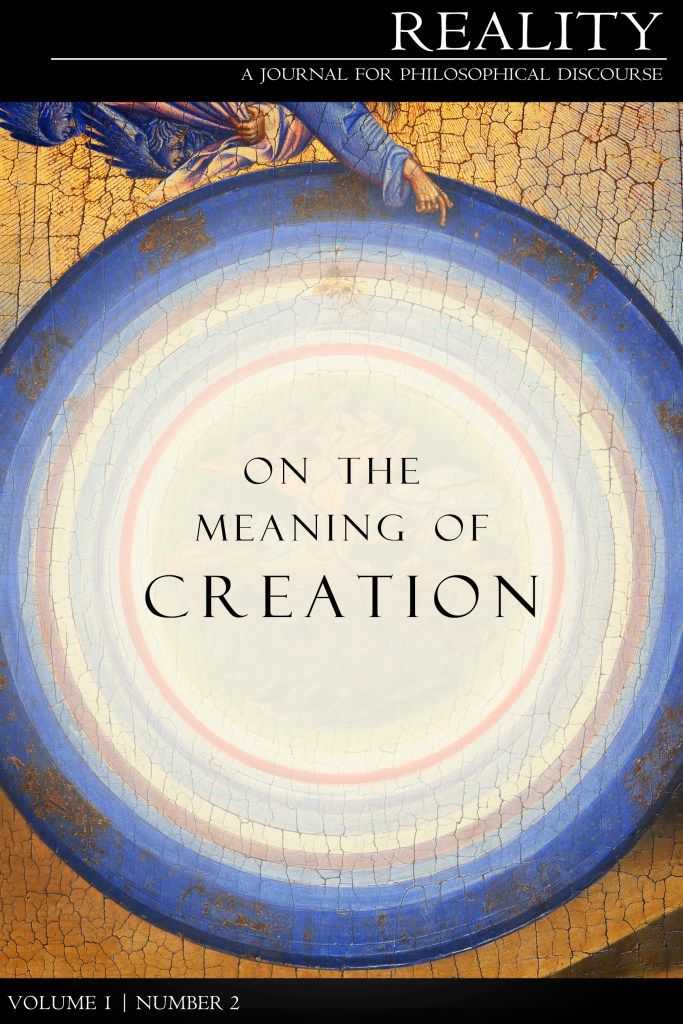
What does it mean “to create”? The word has seen a conceptual shift in the Western world, as the influence of deep Christian understanding has waned and a cosmologically nihilistic worldview has supplanted it as the default background. Today, one finds it applied (albeit vaguely) not only to those engaged in the high arts but the producers of “content”. Correlatively, the notion of “creation”—as that brought into being by the act of creating—has likewise undergone a shift, seemingly imbued with an emphasis upon the subjectivity of the “creator”.
These shifts in meaning, one may well argue, reflect not only the submission to the nihilistic image of the cosmos, but a metaphysically-deficient understanding of the concrete reality of the world in which we live: an understanding that does not grasp the things by which we are surrounded, that attains no insight into the beings of nature.
Retrieving the classical conception of creation—so it seems—may be necessary for rectifying this deficiency in understanding. It is to this end, and with an explicit view towards the pre-modern concept of creation, that this Call for Papers asks:
What is creation? What does it mean? How is it understood? How do we, as intellectual beings, participate in creative activity? What are the consequences of our creative participations? Is “creation” meaningful absent a classical understanding of transcendence?
Deadline: 30 June 2025
Reviewer suggestions:
If you have in mind a good critical reviewer of your work—someone who can provide a thoughtful engagement of the material—feel free to include this recommendation in your submission. Alternatively, if you cannot submit an Article but would be interested in volunteering to review those that have been accepted, please let us know.
Submission Guidelines
Article Length: 8,000-15,000 words | Review Length: Comment: 2,000-6,000 words; Response: 6,000-12,000 words. We understand length restrictions as guidelines. If an article is a few hundred words over or under—or even a thousand—this will not be cited as a reason for rejection. If it is considerably under, we may suggest publication as an Online Essay; if considerably over, we may suggest publication as a multi-part piece.
Footnotes: all references must be placed in footnotes; submissions containing endnotes will not be accepted. Bibliographic sourcing and footnote formatting should be done according to Chicago Style, although the editors recommend the practice of historical layering (including date of composition in all footnotes, rather than date of the particular version’s publication). We also insist that the full title of the work be given in the first footnote and abbreviated titles in all subsequent (i.e., no citations of date alone).
Abstract: all submissions must contain an abstract of between 150-400 words. This facilitates the evaluation process for Editors.
Keywords: it is recommended that Article submissions contain 5-10 keywords sometime before publication. If the submission is received without a list of keywords, an Editor will request them before the Article is published.
More details about our publishing process can be found here.
Please send all submissions to editors@realityjournal.org.
 REALITY
You must be logged in to post a comment.